Seamless Loop Reels: Editing Tricks That Boost Replays and Watch Time
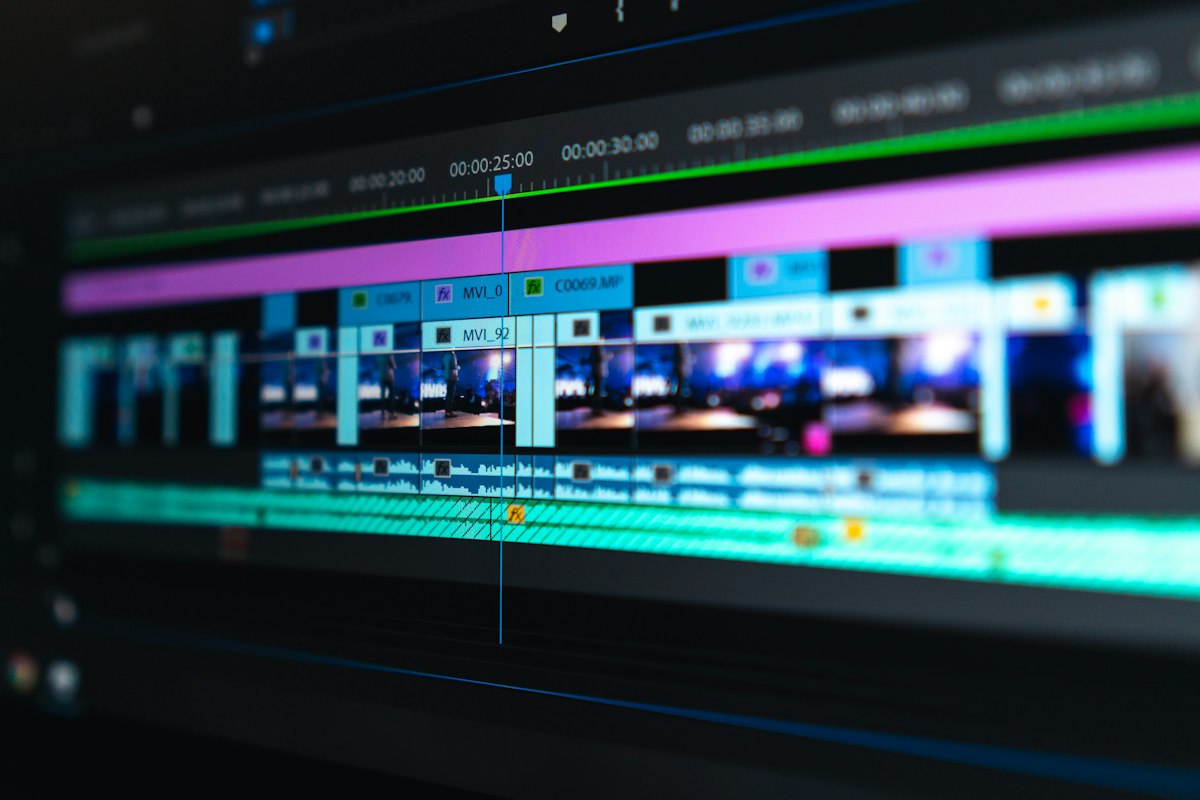
- Primary Signal: Seamless Loop Reels: Editing Tricks That Boost Replays and Watch Time
- Overview: A Reel that loops without viewers noticing earns replays, longer watch time and stronger ranking — learn the match-cut, sound loop and action-continuation techniques that make loop...
- Verification: Analyzed and compiled by ReelHub Live editorial monitoring desk.
Watch time is the first signal Instagram ranks Reels on, and the cheapest way to increase it is not a longer video but a loop viewers do not notice. When a Reel ends exactly where it began — the same motion, the same sound, the same visual — many viewers watch it twice before realising it restarted, and some watch it three times. Each replay adds watch time and completion, and a Reel watched to the end repeatedly sends the system exactly the signal it rewards. Loop editing is not a gimmick for dance videos; it works for tutorials, comedy, product clips, and talking-head Reels, because the technique is about continuity, not genre.
Instagram counts a view when a Reel starts or replays, but ranking depends on how long people actually stay. A fifteen-second Reel watched twice gives thirty seconds of watch time and two completions, which looks to the system like a deeply engaging video. A ninety-second Reel that most viewers abandon halfway gives forty-five seconds and no completion, which looks worse despite being longer. That is why tight, looping Reels regularly outperform long, slow ones: the loop manufactures completion and multiplies watch time without asking the viewer to commit to more content. The key is invisibility — if viewers notice the restart, they swipe; if they do not, they stay for another round and the metrics compound.
The action-continuation loop is the simplest: end mid-motion and begin mid-motion, so the cut hides inside movement. A creator pouring coffee can end with the pour halfway and start with the pour halfway, and the eye follows the motion across the cut. The match-cut loop matches the last frame to the first frame visually — the same angle, the same object position, the same lighting — so the restart feels like a single continuous shot. The sound loop matches the audio: end a music phrase or a spoken sentence at a point where the opening beat or word naturally follows, so the ear does not register a break. Use one technique per Reel and execute it cleanly; combining all three badly is worse than using one well.
Loops fail when they are added in editing to footage shot without a loop in mind. Plan the loop on set: decide your first and last frame before recording, and film the ending as a continuation of the opening rather than a conclusion. Keep the Reel short — ten to twenty seconds loops far more reliably than sixty seconds, because viewers need to hold the opening in memory for the match to register. Avoid a hard ending: no wave goodbye, no thanks for watching, no fade to black, because all of those tell the viewer the video is over and break the spell. Instead, end on an unresolved motion — a hand reaching, a door opening, a sentence half-finished — that the opening frame completes.
You cannot judge a loop by watching it yourself, because you know where the cut is. Show it to someone who has never seen it and watch their face: if they keep watching past the loop point without reacting, the loop works. In Insights, compare average watch time to the Reel's length: if average watch time exceeds the length, viewers are replaying, and your loop is doing its job. If watch time stalls at one viewing, the cut is probably visible — check whether the lighting, framing, or sound changes at the join, and tighten the match. Also watch retention graphs if available: a sharp drop at the loop point means viewers noticed the restart, while a flat line means they stayed. Iterate on the cut, not the content, until the line flattens.
Loops are watch time you do not have to earn twice. Plan the first and last frame before filming, hide the cut inside motion or sound, keep the Reel short, and test on fresh eyes. When viewers cannot tell where your Reel ends, they give you the replays that ranking rewards.
📖 Continue Reading the Full Story
Continue reading this article on ReelHub Live.
⚡ Access Full Content NowMore from ReelHub Live


 🎮 GameVault 668
Automation & Integration: Instagram Video Downloader — Save Reels in HD (Day 27 Guide)
Streamlining daily analytics with our Instagram Video Downloader — Save Reels in HD on GameVault 668. Discover...
 🤖 WinBar AI
Instagram Reels Downloader for PC: Save Reels Free Online
Download Instagram Reels to your PC free — no app, no login. Paste the reel link and save in HD quality straig...
🔥 ViralBuzz 168
Operational Standard: Playback Speed Calculator — Video Time at Any Speed (Day 21 Guide)
Establishing consistent quality with the Playback Speed Calculator — Video Time at Any Speed on ViralBuzz 168....
 🍿 CosmoCinema 998
Regulatory & Compliance Guide: Playback Speed Calculator — Video Time at Any Speed (Day 25 Guide)
Navigating statutory requirements with the Playback Speed Calculator — Video Time at Any Speed on CosmoCinema ...